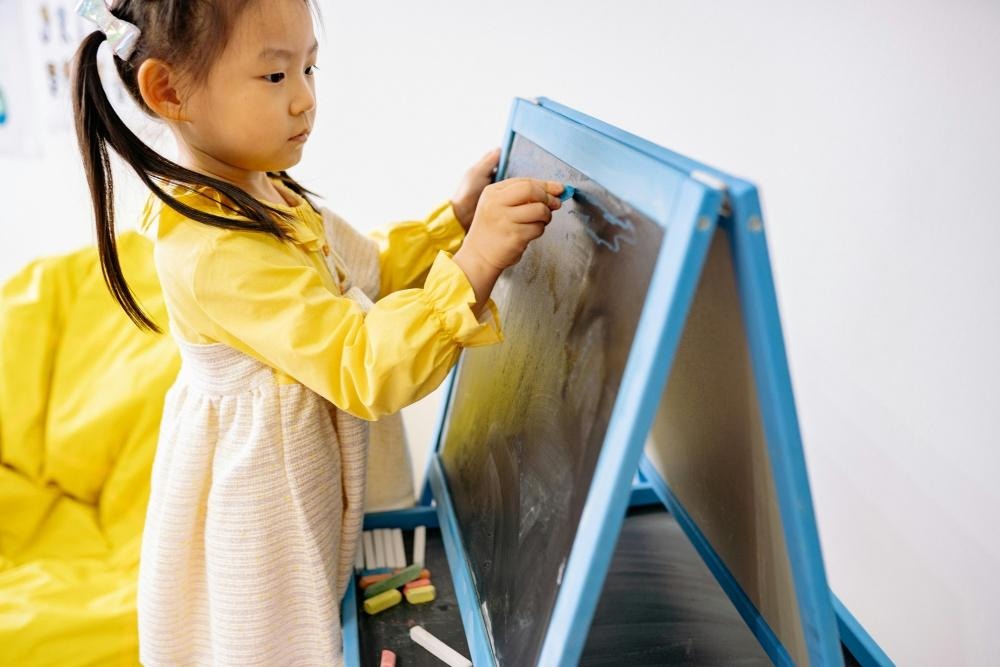
If you're exploring preschools in Singapore, you've likely come across the Montessori vs preschool debate. Montessori focuses on self-directed learning, independence, and hands-on materials in mixed-age groups. Traditional and play-based preschools tend to follow teacher-led, structured activities covering literacy and numeracy, with a stronger emphasis on social skills and primary school readiness. Many local schools now blend both approaches to support holistic child development.
What Is Montessori?
Developed by Dr Maria Montessori, Montessori is a child-led philosophy that views children as naturally curious and capable of guiding their own learning. It typically consists of three core elements:
- A Prepared Environment: Educators set up a purposeful, well-resourced space where children initiate their own activities rather than following a prescribed lesson plan.
- The Teacher as Guide: Instead of direct instruction, educators observe closely and step in gently when a child shows readiness.
- Specialised Learning Materials: Tactile, self-correcting tools, such as sandpaper letters and the pink tower, help children explore abstract concepts through hands-on discovery.
What Is the Montessori Approach?
To understand what the Montessori approach is in practice, it helps to look at how learning, teaching, and outcomes are structured:
- Learning Style: Child-led and self-paced, using tactile, specialised materials to explore concepts through physical engagement.
- The Classroom and Teacher: Mixed-age groups (typically 3 to 6 years) allow older children to naturally mentor younger ones, with the teacher guiding rather than instructing.
- Focus and Outcomes: Independence, concentration, and practical life skills are central, building self-discipline and intrinsic motivation.
What Is the Approach of Traditional and Play-Based Preschools?
Traditional preschools follow a structured, teacher-led model that ensures all children progress through key developmental milestones together. This typically looks like:
- Learning Style: Lessons are planned around themes, literacy, and numeracy, with the teacher guiding the whole group.
- The Classroom and Teacher: Same-age groupings encourage peer interaction, with the teacher leading planned activities and creative play.
- Focus and Outcomes: Social skills, collaboration, and foundational academics are prioritised, making this a natural fit for Singapore's primary school structure.
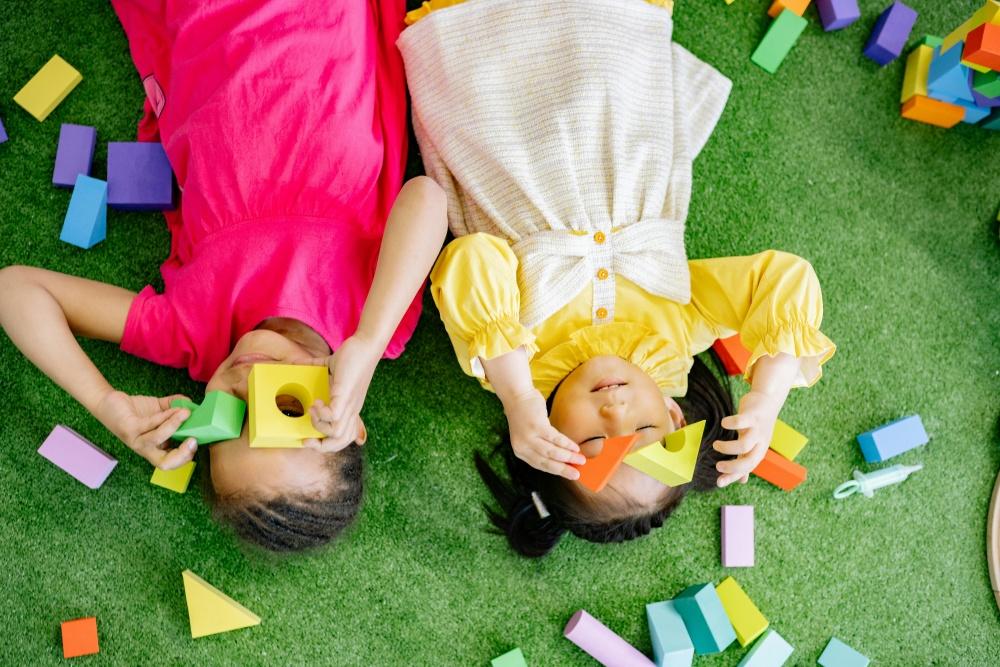
Is Montessori Better Than Traditional Preschool?
Is Montessori better? When weighing up Montessori vs preschool, the honest answer is that neither approach is objectively superior. The right fit depends entirely on your child.
You should first consider your child's personality over pedagogy. Independent, curious children often thrive with the autonomy of Montessori, while children who feel most secure with routine may settle more comfortably into a traditional setting.
It's also worth considering the long view. Some parents prioritise Montessori for its focus on developing stronger self-regulation and social-emotional skills, though others prefer traditional preschools that offer more direct preparation for the structured environment of a Primary 1 classroom.
However, what ultimately matters most, regardless of approach, is quality. The best school is one with a calm environment, quality resources, and a low teacher-to-student ratio where every child feels seen and supported.
Finding the Perfect Balance with Little Footprints Preschool
Whether you're looking at a Jurong West preschool or a Bukit Panjang preschool, Little Footprints Preschool offers the right foundation for your child to grow, learn, and thrive. Our Sustainable Education® approach focuses on establishing physical and emotional security, developing natural curiosity, nature-based learning, respecting each child's rhythm, fostering inclusion and multiculturalism, and collaborating with families. Hence, we focus on:
- Nurturing the Whole Child: Our curriculum integrates child-led discovery with structured learning objectives to build confident, Primary 1-ready learners.
- Hands-On Discovery: We prioritise experiential learning, letting children construct their own understanding through active engagement rather than passive instruction.
- A Natural Daily Rhythm: Independent exploration and teacher-led sessions are carefully balanced, allowing educators to introduce new challenges the moment a child's ready.
- Preparing a School-Ready Learner: The result is a child with self-directed confidence and the social skills to thrive in a primary school environment.
Still weighing up Montessori vs preschool? Explore our curriculum or book a tour to find out if Little Footprints is the right fit for your child.


