
If you have ever struggled to end screen time with a determined toddler clutching a tablet, you are not alone. If you have ever struggled to end screen time with a determined preschooler clutching a tablet, you are not alone.Screen time for children is one of the most common sources of pressure in modern parenting, but it does not have to be a battle. Used thoughtfully, technology is a tool that opens worlds. The challenge is knowing where to draw the line.
Ms Rowena Mark Ramos, 37, head of curriculum at Babilou Family Singapore, puts it well in an interview with The Straits Times. She notes that while it is natural for children to be curious about screens and devices once they are old enough to notice them, the key is not to overly restrict access, especially for older children. Here, the goal is not elimination, but balance.
In Singapore, that balance carries particular weight. As primary and higher education rely increasingly on online learning, children today need to be comfortable with technology. For younger children, especially, parents play a vital role in building healthy digital habits before those habits develop on their own.
Our guide offers practical strategies to help parents do exactly that.
Recommended Screen Time for Children
Following guidelines from health experts and the Ministry of Health (MOH), children under 18 months should avoid screen time entirely, with the exception of video chatting. For children aged 18 months to 6 years, the recommended screen time for children is no more than one hour per day of high-quality, educational programming.
Key Strategies for Managing Screen Time at Home
Knowing the guidelines is the easy part. The harder work is building a home environment where those boundaries hold consistently, and without conflict. Here are four strategies that offer a practical starting point on how you can limit screen time for your children.
Create Tech-Free Areas
Designate your dining table and bedroom as no-phone zones, spaces reserved for conversation and rest. Screens in the bedroom are particularly disruptive: blue light suppresses melatonin, so powering down at least an hour before bed makes a meaningful difference to sleep quality. Where possible, involve your child in drafting these rules together. A simple "screen time contract" builds ownership and reduces resistance.
Use Smart Tools for Digital Parent-Partnership
Parental controls remain one of the most underused resources available. Setting time limits and content filters puts healthy boundaries in place without requiring constant negotiation. Disabling autoplay and notifications is equally effective, as it breaks the passive loop that makes limiting screen time for children so difficult. For older children, reviewing screen time reports together is a natural way to open conversations about digital self-awareness.
Go Unplugged
Keep a physical "activites jar" stocked with activity prompts: messy play, building blocks, drawing, or a trip to the park. Simple outdoor time engages the senses in ways no screen can replicate. And perhaps most importantly, put your own phone away during family time. Children are perceptive, and your behaviour is the most persuasive screen time guideline you can offer.
Master the Transitions
Transition is key, as it gives children the mental space to shift gears without a meltdown. However, time-based warnings, such as a “five-minute notice,” are more meaningful for older children. Younger children rely on consistent routines and predictable patterns to anticipate what comes next, for example, screen use followed by snack time.
Parents can support these transitions with visual prompts, like a coloured timer, and simple, concrete cues such as, “I’m going to prepare your snack now. When it’s ready, we’ll enjoy it together without the screen.”
Consistent, clear and predictable boundaries help children transition with greater ease.
Cultivate Healthy Behaviours with Little Footprints Preschool
At Little Footprints Preschool, our learning approach keeps children actively engaged in building, creating, and collaborating, so that the pull of a screen is naturally replaced by the satisfaction of hands-on discovery.
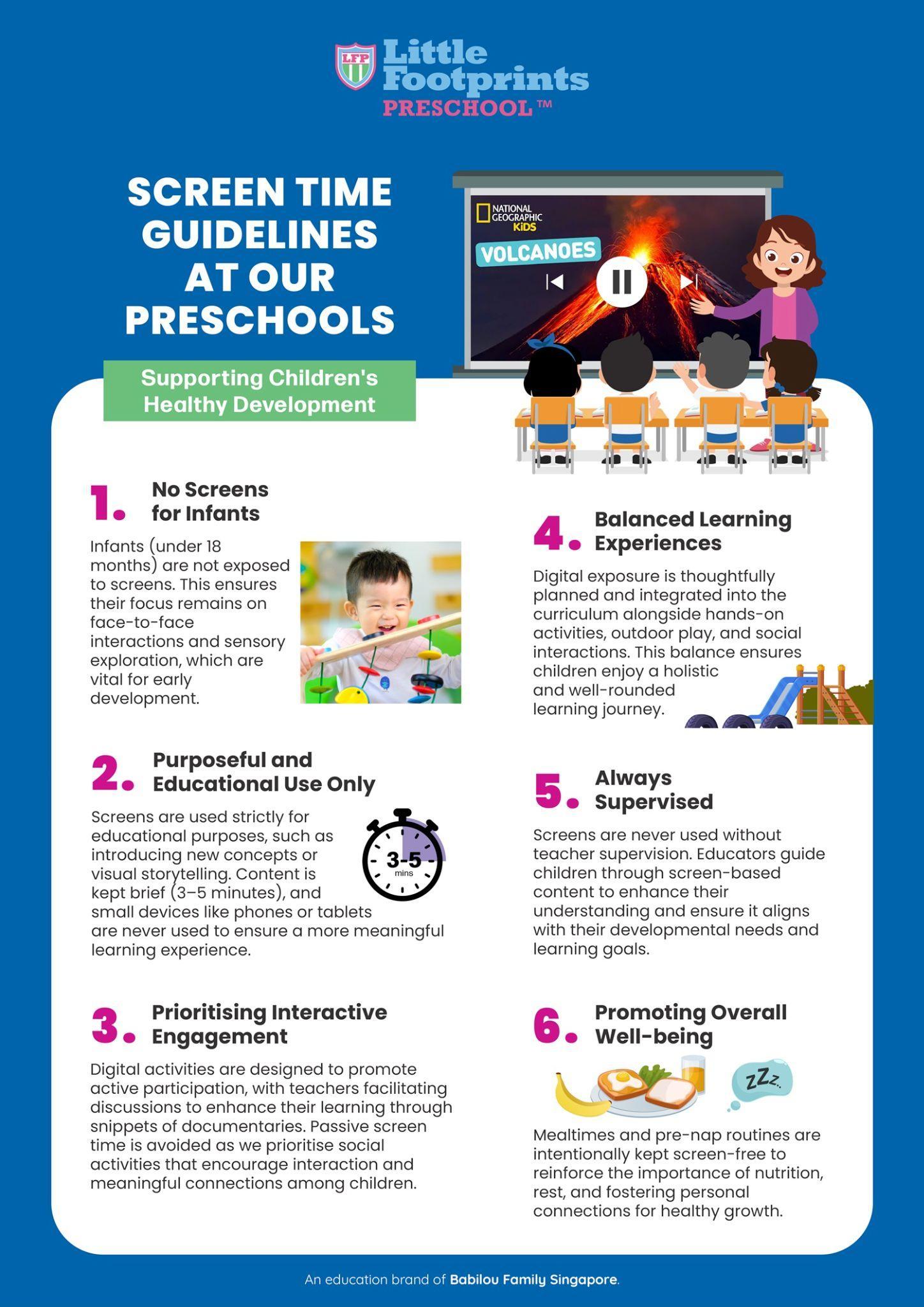
We are also committed to being a true partner in parenting. To learn more about how we support healthy screen habits beyond the home, read a mode detailed guide to Little Footprints Preschool's approach to children's screen time.
Ready to see our approach in action? Explore our preschool in Singapore or book a tour at a centre near you. As a POP-appointed preschool, families may also be eligible for childcare programme subsidies, making quality early childhood education more accessible than you might think.


