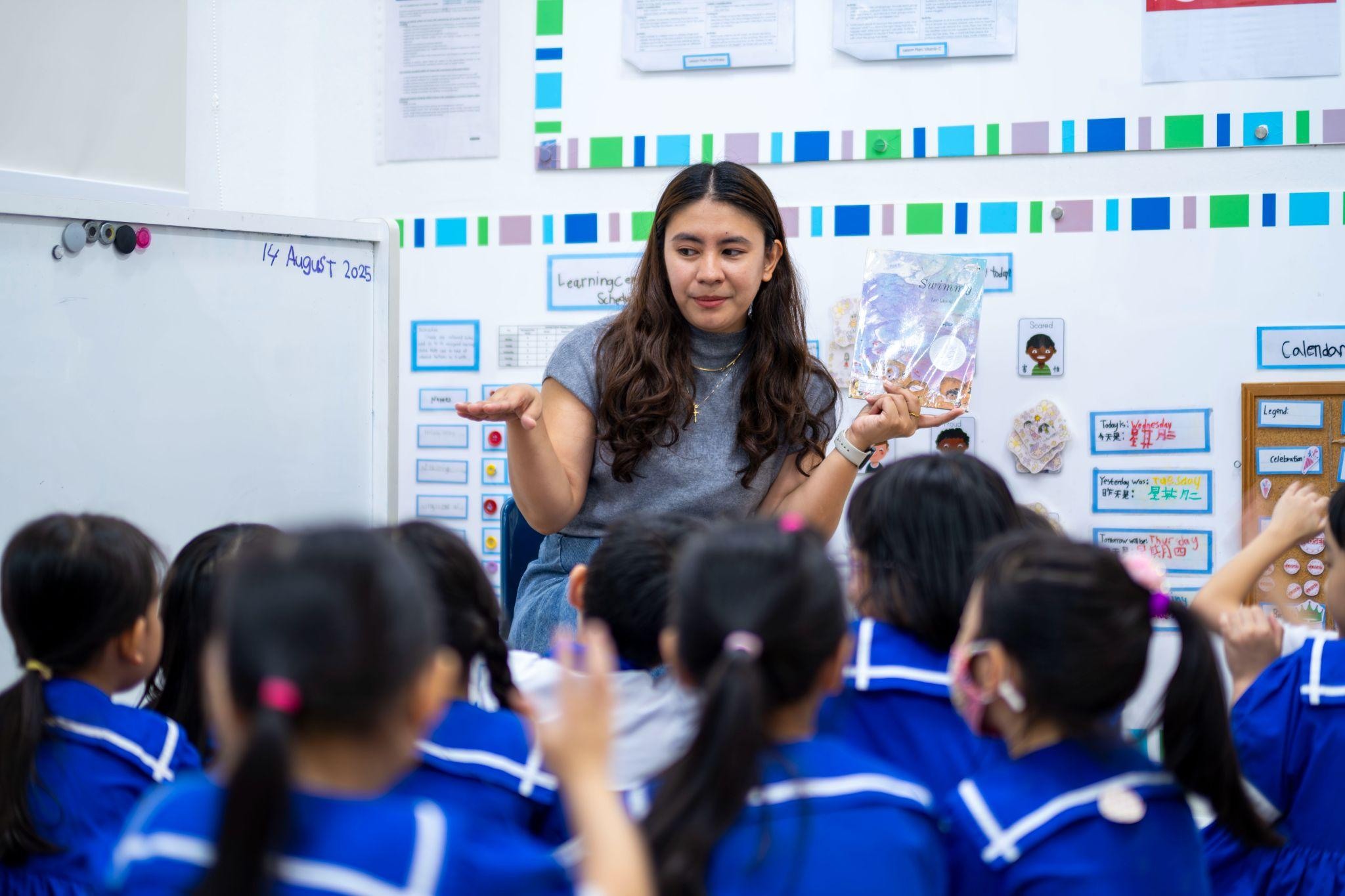
When parents tour a preschool, they notice the colours on the walls, the layout of the learning corners, the warmth in an educator's greeting. What’s less visible but just as important is the number of children each educator is responsible for at any given moment.
In Singapore, the Early Childhood Development Agency (ECDA) sets minimum qualified staff-to-child ratios for every licensed preschool, varying by age group. More than a regulatory requirement, these numbers shape the texture of a child’s day: how quickly a concern is noticed, how often a child hears their name, how much space a teacher has to truly listen. By understanding what these ratios mean in practice, you’ll have the confidence to ask better questions and make more informed choices when finding the right preschool for your little one.
ECDA Minimum Qualified Staff-Child Ratios
ECDA guidelines set clear minimum staffing requirements for all licensed preschools in Singapore, ensuring every child receives a baseline level of supervision, care, and learning support. These student-teacher ratios are non-negotiable for any childcare centre operating under an ECDA licence.
Here’s a full breakdown by class level:
|
Class Level |
Age of Children |
Staff-to-Children Ratio |
Staff-to-Children Ratio (with Additional Assistant Educator) |
|
Infant |
18 months and below |
1:5 |
Not Applicable |
|
Playgroup |
18 months to below 3 years |
1:8 |
1+1 : 12 |
|
Pre-Nursery |
Children who turn 3 during the enrolment year |
1:12 |
1+1 : 18 |
|
Nursery |
Children who turn 4 during the enrolment year |
1:15 |
1+1 : 20 |
|
Kindergarten 1 |
Children who turn 5 during the enrolment year |
1:20 |
1+1 : 25 |
|
Kindergarten 2 |
Children who turn 6 during the enrolment year |
1:25 |
1+1 : 30 |
Source: Early Childhood Development Agency (ECDA), Singapore
Why Teacher-Child Ratios Matter More Than You Think
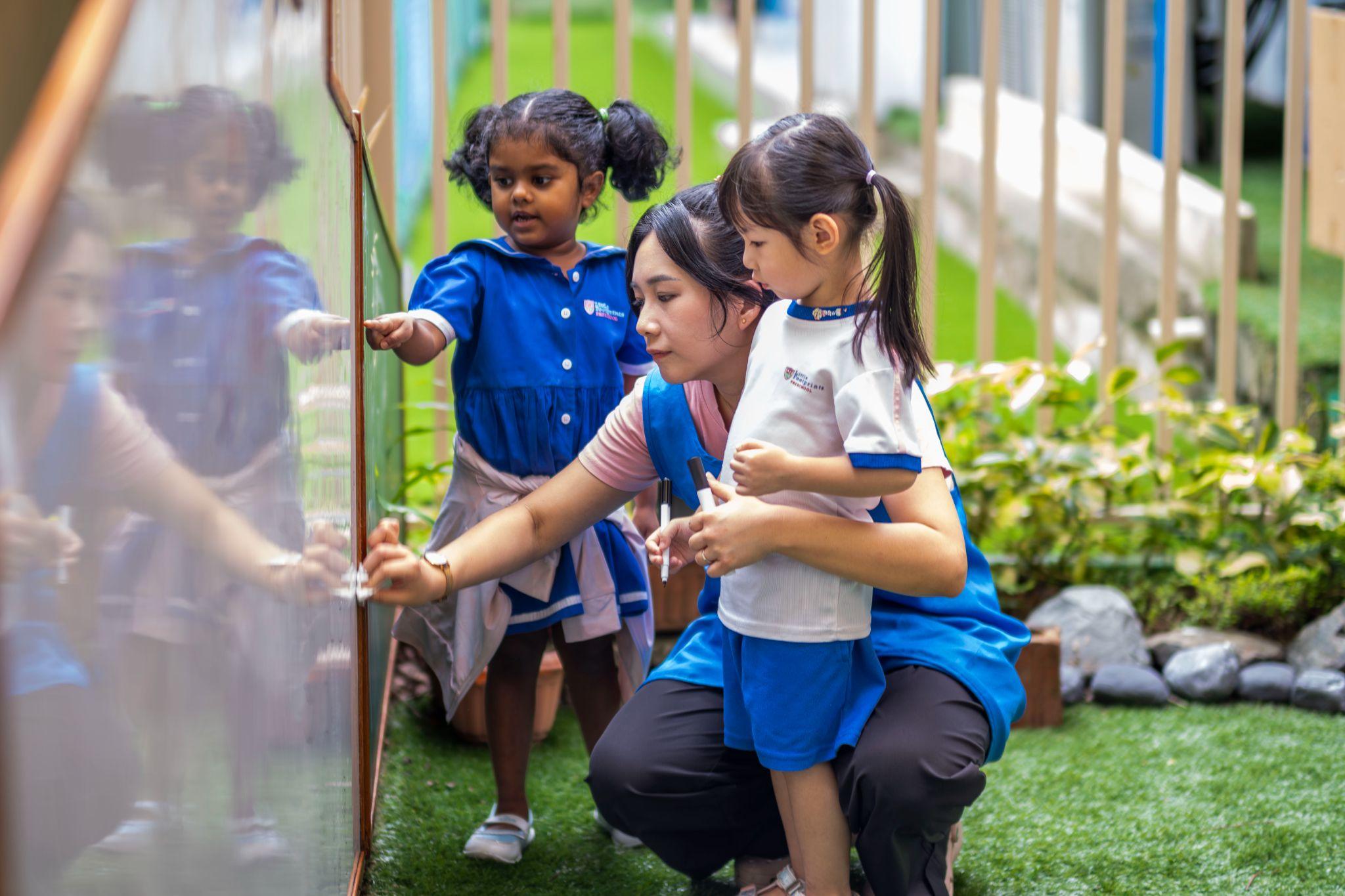
The student-teacher ratio in a daycare or playgroup classroom quietly determines what kind of experience a child has every single day. Here’s what the research and practice consistently tell us:
- Individual Attention: In a smaller group, educators can observe each child’s unique learning style, emotional needs, and developmental stage with much greater clarity. That means support arrives at the right moment, personalised and timely, rather than stretched thin across too many competing needs at once.
- Emotional Safety and Belonging: Young children build trust through consistent, warm interactions with the adults who care for them. A low ratio gives teachers the time and presence to nurture those relationships meaningfully, so children feel genuinely seen and secure in their environment rather than simply managed within it.
- Better Learning Outcomes: Research consistently shows that children in smaller groups develop stronger language skills, social confidence, and school readiness. When an educator is not overstretched, every interaction becomes a richer opportunity for learning rather than just supervision.
- Behaviour and Wellbeing: More attentive supervision means educators can spot the early signs of distress, conflict, or disengagement before they escalate. Small moments, caught early and handled well, rarely become bigger challenges.
Knowing the minimum ratios is a useful starting point, but it’s worth going further when you visit a centre. Ask how classrooms are staffed in practice, what happens when an educator is absent, and whether ratios change during transition periods like morning drop-off and afternoon dismissal. The answers reveal a great deal about how a preschool in Singapore thinks about the quality of care it provides.
Our Commitment to Optimal Teacher-Child Ratios at Little Footprints Preschool
At Little Footprints Preschool, we see ECDA's staffing ratios as a floor, not a ceiling. This commitment holds across every programme and every location, whether that means infant care at Bukit Panjang or kindergarten in Yishun, Singapore. Smaller, more intimate group sizes give our educators the space to truly know each child in their care. That kind of knowing takes time, attention, and a classroom that is not stretched beyond what genuine care allows.
That standard begins with how we train and support our educators. Guided by Babilou Family's Scientific Education Committee, our teachers ground their practice in research on how children develop and learn during the early years. They respond to each child’s stage with empathy, intention, and expertise, because the quality of every interaction matters as much as the number of interactions a child receives.
Both commitments, the right ratios and the right people, sit at the heart of our Sustainable Education® approach: the belief that learning flourishes in the context of trusting relationships. A well-staffed classroom isn’t just a compliance matter; it’s the condition that makes everything else at Little Footprints possible. And because our educators have the time and headspace that a well-managed ratio allows, they’re better partners to families, too. Parents feel genuinely informed about how their child is doing, not just reassured.
Curious about how we structure our classrooms and care for your child every day? Explore our curriculum, check upcoming open house dates, or book a tour of our childcare centres to see our learning environment for yourself.


