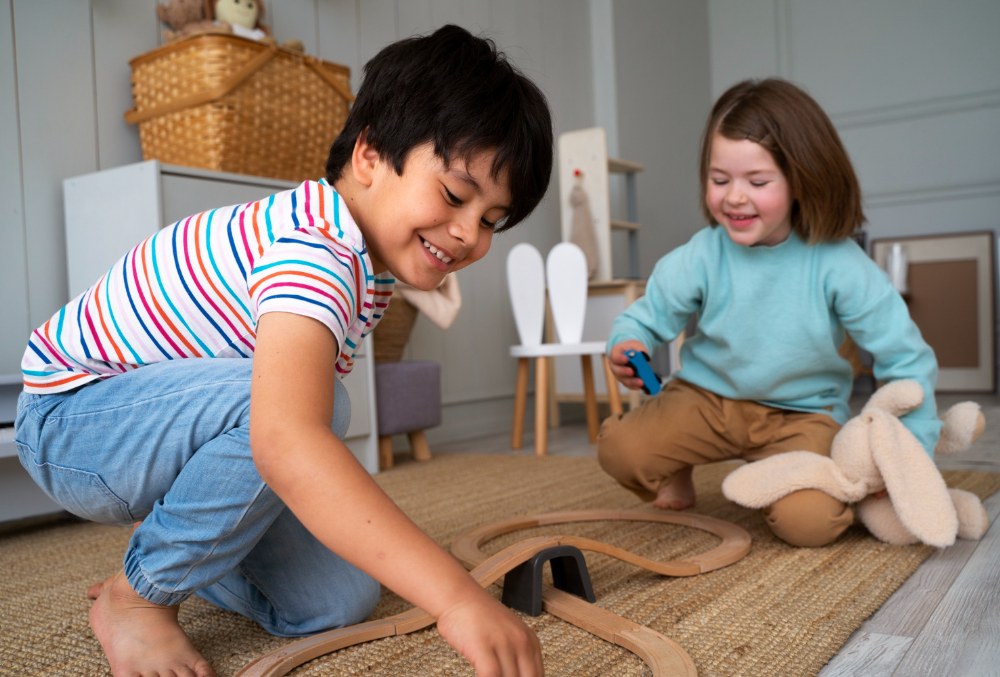
Rain is hammering the window, the weekend plans have quietly fallen apart, and a small person is circling the living room looking for trouble. Every Singapore parent knows this moment. The question is never just "what do we do indoors?" It’s "what do we do indoors that is actually worth doing?"
The best indoor activities for kids aren’t the ones that simply fill time. They’re the ones that quietly build something: fine motor strength, language, focus, creativity, or the ability to sit with a problem long enough to solve it. With Singapore's unpredictable weather making outdoor plans a weekly gamble, having a reliable repertoire of meaningful indoor things to do is less a nice-to-have and more a practical necessity. This guide organises them by what they develop, so you can choose with intention rather than just grabbing whatever is nearby.
Indoor Activities That Build Fine Motor Skills
Fine motor strength is the physical foundation for writing, self-care, and the everyday tasks children will be expected to handle independently from Primary 1 onwards. The good news is that building it does not require specialist materials. Most of what you need is already in your pantry or at the nearest heartland provision shop:
- Playdough Play: The resistance of playdough is excellent for building hand and finger strength. Give a child safe tools, a rolling pin, and some loose moulds, then step back.
- Threading and Lacing: Threading pasta or large beads onto a string can be very effective for developing the pincer grip that pencil holding depends on. Dried penne or large wooden beads both work well.
- Tear and Scrunch Collage: Tearing along a straight line requires control; scrunching into tight balls builds palm strength. Pair it with a glue stick and a sheet of card for a full afternoon.
- Tong and Chopstick Transfers: Set out two bowls and a handful of cotton balls, pom poms, or dried beans, then challenge your child to move them across.
- Chunky Crayon Mark-Making: Large paper removes the pressure of staying within lines and gives children room to develop grip and control at their own pace. Tape it to the floor or a low wall for variety.
Indoor Activities That Build Language and Communication
For families spending time indoors in Singapore, language development doesn’t require flashcards or structured sessions. Conversation, storytelling, and imaginative play are the most effective vehicles available, and children engage with them willingly precisely because they feel like learning:
- Storytelling with Loose Parts: Gather a random handful of household objects and challenge your child to make up a story that connects all of them. Children reach for more precise, more inventive language when they need words to make something work.
- Sock Puppet Theatre: Part of the attraction of puppet play is the safe distance it creates. A child who might not yet feel confident expressing something directly will narrate, argue, problem-solve, and negotiate freely through a character, unlocking a great deal of language in the process.
- Descriptive "I Spy.": Replace colour-only clues with sensory and functional ones: "I spy something smooth that you use every morning." This version of the game stretches descriptive vocabulary and requires children to think about objects in more than one dimension.
- Pause and Wonder Reading: Rather than reading straight through, stop at key moments and ask open questions: "Why do you think she did that?" or "What do you think will happen next?" The conversation that follows is often richer than the book itself.
- Home Show-and-Tell: Ask your child to pick one object from anywhere in the home and tell you what it is, where it came from, and why it matters to them. It’s a simple structure that produces surprisingly thoughtful, well-organised answers, and it builds the kind of oral confidence that serves children well once they’re in a classroom.
Indoor Activities That Build Focus and Attention
Focus is a muscle, not a personality trait, and it’s built the same way any muscle is: through repeated, appropriately challenging effort followed by the satisfaction of completion. Short, absorbing bursts of concentrated activity are how attention spans grow in young children:
- Age-Appropriate Puzzles: Start small and resist the urge to guide or hurry. The frustration of a piece that doesn’t quite fit, followed by the moment it does, is exactly the experience that builds persistence. Increase complexity gradually as confidence grows.
- Memory Card Games: Flipping two cards at a time, holding earlier positions in mind while scanning for matches, can be demanding for a young brain. It builds working memory and patience in equal measure, and most children ask to play again immediately.
- Dot-to-Dot and Tracing: The combination of counting, sequencing, and controlled pencil movement makes dot-to-dot activities a quiet but effective focus builder for children approaching Kindergarten age.
- Stack and Balance: Ask your child to build the tallest possible tower using only cups, or to balance a book on top of a box without it falling. The trial, adjustment, and eventual success cycle is focus training in its most natural form.
- Watching Something Grow: A small indoor plant on the windowsill, a bean in a damp cotton ball, a simple herb in a recycled tin: daily observation over days and weeks builds the capacity to notice small changes and sustain interest in something that doesn’t deliver instant results.
Indoor Activities That Build Creativity and Imagination
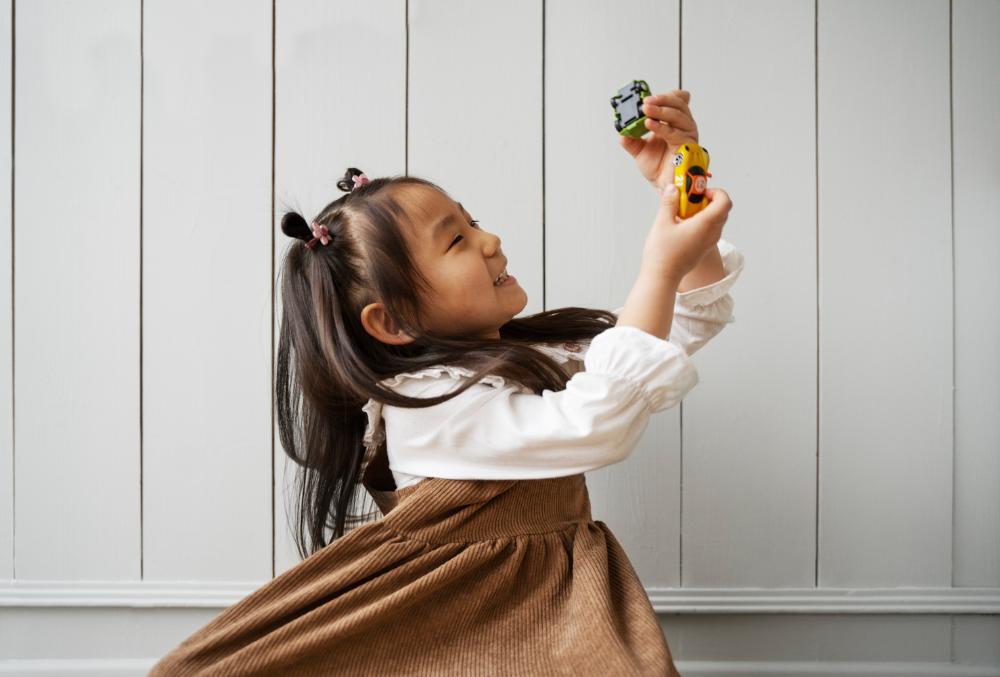
Unstructured creative play is where a child's sense of identity, resourcefulness, and problem-solving capacity develop most freely. The less you prescribe, the more they build:
- Free Build: Cardboard boxes, toilet rolls, rubber bands, masking tape, and old containers are more creatively generative than most purpose-built construction toys. The limitation of imperfect materials forces children to think, adapt, and invent.
- Dramatic Role-Play Scenarios: Set up a "hawker stall," a "clinic," or a "library" using household items and let your child take charge of the world they have created. The vocabulary, social negotiation, and narrative thinking that emerge from these scenarios are among the richest forms of learning available at this age.
- Process Art: Give a child paint, paper, and no instructions. No template, no expected outcome, no "make it look like this." The value is in the thinking, experimenting, and decision-making that happens along the way.
- The Boredom Jar: Fill a jar with small slips of paper, each with a simple activity prompt written on it. When your child says they have nothing to do, they draw one at random. The element of chance makes it feel like a game rather than a directive, and children are almost always more willing to engage with something they feel they chose.
- Kitchen Percussion: Pots, wooden spoons, containers filled with different amounts of water, and sealed jars of dried rice become a full percussion kit with a little imagination. Experimenting with sound is creativity, physics, and play all at once.
Indoor Games for the Whole Family
Sometimes the most valuable thing a parent can do is put the phone down and get on the floor. These activities work best when everyone is genuinely involved, and they scale surprisingly well across different ages in the same family:
- Simon Says: Deceptively simple and genuinely effective for building listening skills, self-regulation, and body awareness. The rule-following is the developmental work, even when it looks like pure silliness.
- Preschool Charades: Stick to categories young children can genuinely work with: animals in Singapore, food, and everyday actions. The game becomes inclusive across ages, surprisingly competitive, and a great deal more entertaining than the adult version. For children who are not yet reading, simple picture cards work just as well as written prompts.
- Living Room Obstacle Courses: Cushions to jump between, masking tape lines to balance along, rolled towels to step over. A course like this comes together in minutes, can be dismantled and redesigned just as quickly, and gives children the kind of whole-body movement they genuinely need on days when going outside is not an option.
- Picture Scavenger Hunt: Draw or print simple picture clues rather than written ones so that non-readers can participate fully and independently. There’s something worth preserving in the moment a child finds the right object entirely on their own, no hints, no help, just the quiet satisfaction of figuring it out.
- Cooperative Building Challenges: Set a constraint and step back: "Build the tallest tower that doesn't fall using only these ten things." The shared investment in not watching it topple, the negotiation over what goes where, and the collective problem-solving that follows make this one of the most genuinely engaging indoor games a family can play together.
How Little Footprints Preschool Brings This to Life
The principles behind meaningful indoor play at home are the same ones that shape how learning happens at Little Footprints Preschool every day. Our I.D.E.A. framework, built on hands-on discovery, active engagement, and curiosity-led learning, reflects a belief that children grow most when they are genuinely involved in what they are doing, not sitting still while someone else talks. The activities in this guide aren’t separate from what happens in our Singapore kindergarten classrooms; they’re the same kind of thinking in a different setting.
Children who arrive at preschool accustomed to purposeful indoor play at home tend to settle more readily into the classroom environment. They come with stronger attention spans, richer language, and a greater capacity for independent exploration, all of which make the transition into structured learning feel less like a leap and more like a natural continuation of what they already do well.
The next rainy afternoon is not wasted time. With the right activities and a little intention behind them, it’s exactly the kind of unstructured, creative space where children quietly grow in ways that matter.
Curious about how we turn everyday moments into foundational learning? As a POP-appointed operator, we keep childcare fees in Singapore affordable so that every family can access quality, purposeful early education. Explore our curriculum or join us at an upcoming Open House to see our learning spaces in action.


