There’s a moment most parents recognise, even if they can’t quite name it: a pause mid-sentence, a reach for a word that’s not there yet, a small hand pointing at something their child doesn’t yet have the language for.
Vocabulary is still under construction, and that’s completely normal. What matters is that there’s meaningful, enjoyable work parents can do to help. Vocabulary growth in the early years is one of the strongest predictors of reading comprehension, academic confidence, and communication ability in Primary 1 and beyond, and the best part is that building it doesn’t look like drilling word lists. It looks like rich conversation over dinner, purposeful play on a Saturday morning, and a home full of language worth absorbing. This guide is about making the most of the moments you’re already having.
Why Vocabulary Matters More Than Most Parents Realise
The connection between early vocabulary and later reading ability is one of the most well-established findings in early childhood research. Children who arrive at Primary 1 with a wider vocabulary find it significantly easier to decode unfamiliar words in text; not because they’re better readers technically, but because they already know what those words mean when they hear them spoken aloud. The decoding and the meaning arrive together. For children with a smaller vocabulary base, that second step is missing, and reading comprehension becomes a much steeper climb.
Researchers sometimes refer to this as the "word gap": the difference in vocabulary exposure between children from language-rich and language-poor environments. What the research quietly points to, though, is something far more actionable than it might first appear. Every conversation a parent has with their child, every story read at bedtime, every narrated trip to the market, is building that foundation in real time.
In Singapore's bilingual context, learning both English and Mandarin simultaneously proves to be an advantage. Children building two-word stores at once develop strong metalinguistic awareness, an intuitive sensitivity to how language works that supports vocabulary growth in both languages over time. The goal, then, isn’t to choose one language over the other, but to feed both.
How to Improve Vocabulary Through Everyday Conversation
Conversation is the highest-impact, zero-cost strategy available to any parent who wants to improve their child's vocabulary, and you’re already doing it. The question is how to make it work a little harder. Small shifts in how you speak with your child can make a significant difference to the range and richness of the language they absorb:
- Talk More, Simplify Less: It’s natural to reach for the easiest word, but resist it where you can. If you’re cooking, say "whisk" rather than just "mix." At the market, say "bok choy" and "lemongrass" rather than just "vegetables." Children don’t need every word explained before they can absorb it. Hearing it in context, repeatedly, is usually enough.
- Try the "Goldilocks" Vocabulary Stretch: Introduce one unfamiliar word per conversation, used naturally in context, so the child hears the word and its meaning at the same time. "The soup is simmering, that means it’s bubbling very gently." Not so easy it goes unnoticed, not so difficult it lands nowhere.
- Narrate the World Around You: Running commentary during everyday errands exposes children to words for actions and processes they would never encounter in a picture book. "The bus driver is manoeuvring into the bay." "The checkout machine is processing our payment." It sounds like small talk. It’s actually vocabulary instruction in disguise.
- Ask "Wondering" Questions: Instead of "Did you have fun today?" try "What was the trickiest thing you did today?" or "Was there anything that surprised you?" Open questions require richer answers, and richer answers require richer vocabulary to produce them. The stretch happens on both sides of the conversation.
Building Vocabulary in Early Childhood Through Play
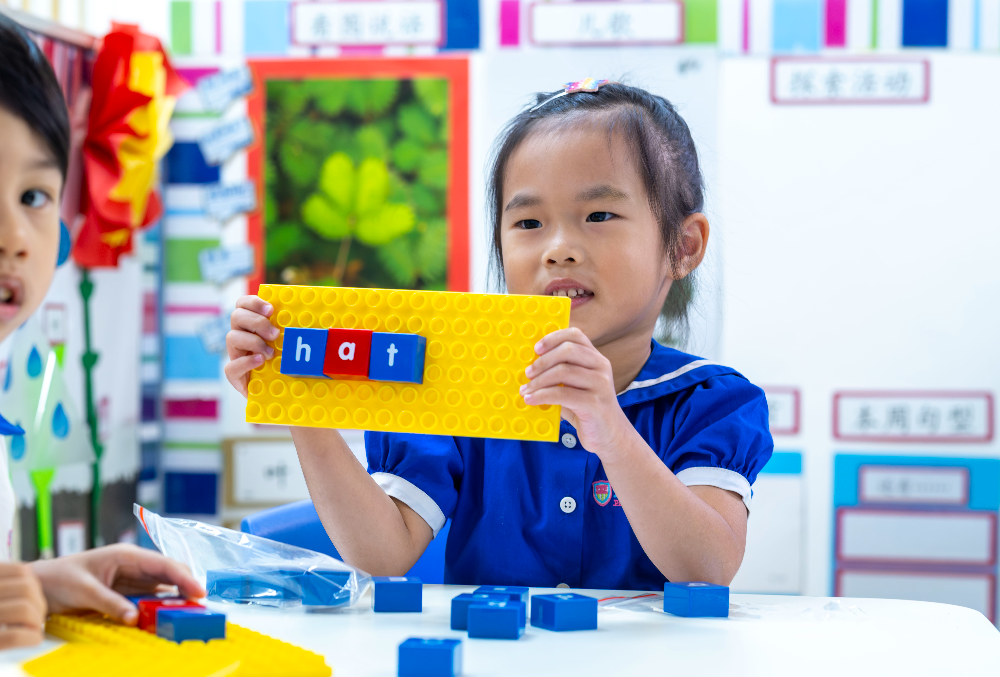
For parents who would rather their child not notice they’re learning, play is the answer. These don’t feel like structured lessons because they’re not. They’re simply good play, with a little intention behind them:
- Dramatic Play as a Word Laboratory: When a child sets up a "hospital" or a "hawker stall," step into the world with them and introduce the vocabulary that belongs there. Stethoscope, prescription, wonton, ladle. Kids absorb and begin using these words naturally within the play context, because they need them to keep the story going.
- Descriptive Sensory Play: Activities involving textures, temperatures, and materials give children a genuine reason to reach for precise adjectives. Rough, smooth, grainy, sticky, translucent. Offer the word when it fits, then step back and let them use it.
- Story-Building Games: Take turns adding one sentence to a story. The parents' sentences can model richer vocabulary while the child contributes their own, absorbing language through participation rather than instruction.
- Word Hunts: During a walk, a meal, or a trip to the playground, challenge your child to find something that matches a describing word. "Find me something that looks transparent." "What around here feels rough?" Simple, playful, and surprisingly effective at making new words feel usable rather than just known.
How Can You Help a Preschooler Expand Their Vocabulary Through Reading
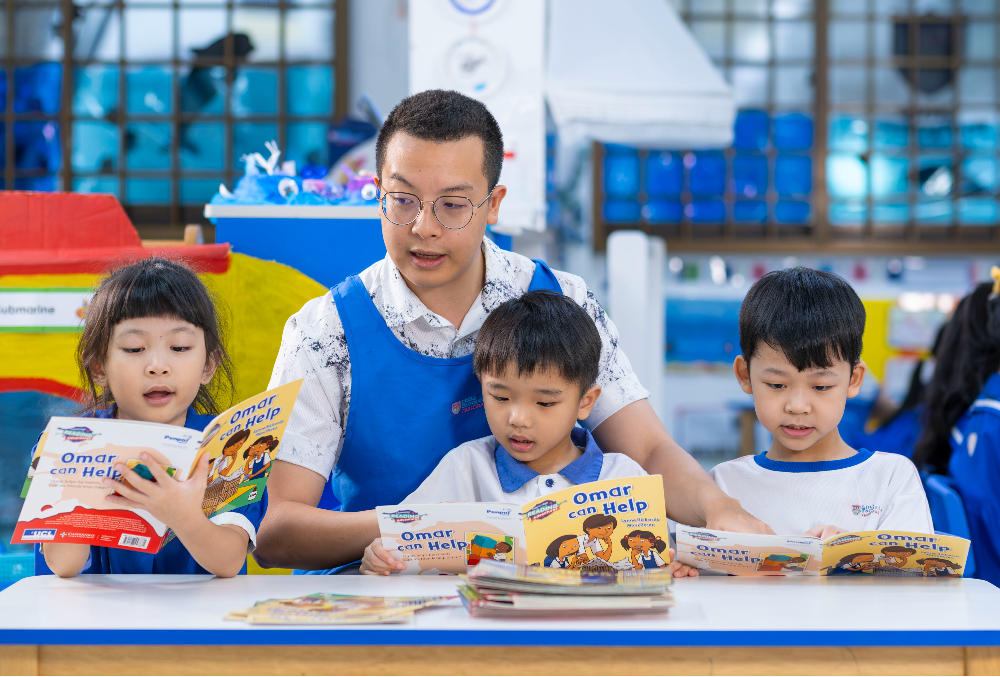
Books are the most concentrated source of vocabulary available to a preschooler. Spoken language, even between attentive parents and curious children, tends to draw from a narrower range of words than written language does. Even a simple picture book introduces children to vocabulary they’re unlikely to encounter anywhere else that day. The way you read together matters as much as how often:
- Read Slightly Above Their Level: Books that stretch a child's vocabulary just beyond their current range are more developmentally valuable than books they can already follow entirely on their own.
- Pause and Define in Context: When an unfamiliar word appears, don’t skip over it. Pause, explain it in one simple sentence, and continue. The story carries the meaning; the definition simply anchors it.
- Re-Read the Same Books: Repetition is how new vocabulary words move from recognition to genuine ownership. A child who hears "enormous" across three readings of the same book will begin to reach for it themselves, in conversation, in play, in the stories they tell. That’s the moment a word truly belongs to them.
- Let Them Ask: Build a habit of "word wonder" in your home. When a child encounters a word they don’t know, celebrate the question rather than just answering it quickly. "That's a great word to notice. Let's find out what it means together." Curiosity about language is a habit worth growing early.
How Little Footprints Preschool Supports Vocabulary Growth
Language development doesn’t stop at the classroom door, and at Little Footprints Preschool, it doesn’t start there either. As a preschool in Singapore built around the needs of heartland families, our learning environments are intentionally designed to surround children with language worth noticing: bilingual signage, print-rich learning corners, and thoughtfully stocked book spaces that make both English and Mandarin feel equally present and equally inviting. These are deliberate choices, built on the understanding that children absorb language from the environments they spend their days in.
Our bilingual approach ensures children are building vocabulary in both languages simultaneously. Educators are trained to introduce new words in meaningful, contextualised ways rather than through rote repetition, because a word that arrives with a story, a texture, or a shared discovery attached to it is a word that stays.
Every word a child learns before Primary 1 is a stepping stone. By the time they encounter it in a textbook or a reading passage, it’ll already feel like an old friend, and that familiarity is what confident, joyful reading is built on.
Curious about how we nurture language development from Playgroup through to Kindergarten 2? As a POP-appointed operator, we also keep childcare fees in Singapore affordable, so that quality, language-rich education is within reach for every family.
Book a centre tour or join us at an upcoming Open House to see our learning environment in action.


