
Every child experiences fear. Sometimes it appears suddenly, feels entirely disproportionate to the situation, and leaves parents unsure whether to reassure, redirect, or simply ride it out.
Childhood fears are not a sign that something is wrong. They're a sign that a child's imagination is developing exactly as it should. The question isn't how to eliminate fear, but how to help a child move through it in a way that builds confidence rather than avoidance.
At Little Footprints Preschool, a child who feels emotionally safe is free to learn. Supporting children through fears and anxiety is part of the social-emotional work we do every day.
Why Childhood Fears Happen
Between ages 2 and 6, a child's imagination grows faster than their ability to distinguish between real and imagined threats. Fear in children at this stage is entirely developmentally healthy.
Neurologically, the amygdala, the brain's emotional alarm system, is highly active in young children and fires before the logical brain can evaluate the situation. This is why reasoning with a frightened child rarely works. Their brain needs calm and connection first, not logic.
It's also worth distinguishing between common childhood fears that are a natural part of growing up and persistent anxiety that may warrant professional support. This blog addresses the former.
How to Help Your Child Overcome Common Fears
Most childhood fears are widely shared and developmentally expected. Here's how to recognise and respond to the most common ones:
- Phobia of Darkness: One of the most common fears in children aged 2 to 6. As imagination develops, the dark becomes a space where anything could be hiding. Validate the feeling without reinforcing the threat. A small nightlight or consistent bedtime routine does more than repeated reassurance.
- Fear of Loud Noises: Thunder, fireworks, and hand dryers are common triggers. The startle response is biological. Helping children name and predict the sound, where possible, goes a long way.
- Fear of Strangers: Healthy wariness of unfamiliar adults is actually protective. The goal isn't to eliminate this fear but to help children feel secure enough to navigate new situations with a trusted adult nearby.
- Fear of Animals: Dogs and insects are the most common culprits. Gradual, low-pressure exposure from a safe distance is far more effective than forced interaction.
- Fear of the Unknown: Starting a new school term or meeting new children can feel overwhelming for children who thrive on routine. You might find our guides on getting your child ready for preschool or preparing for childcare helpful.
What Not to Do When a Child Is Afraid
Most unhelpful responses to a child's fears and anxiety come from a place of love. Here's what to gently avoid:
- Dismissing the Fear: Saying "there's nothing to be scared of" invalidates a child's emotional experience and shuts down the conversation they need to have.
- Forcing Confrontation: Pushing a child to face their fear before they're ready entrenches it rather than resolves it.
- Over-Reassuring: Excessive reassurance can paradoxically heighten anxiety by signalling that there is indeed something worth worrying about.
- Reacting With Alarm: A parent's calm is one of the most powerful co-regulation tools available. A visibly anxious response confirms to the child that the threat is real.
How Little Footprints Preschool Supports Children Through Fear and Anxiety
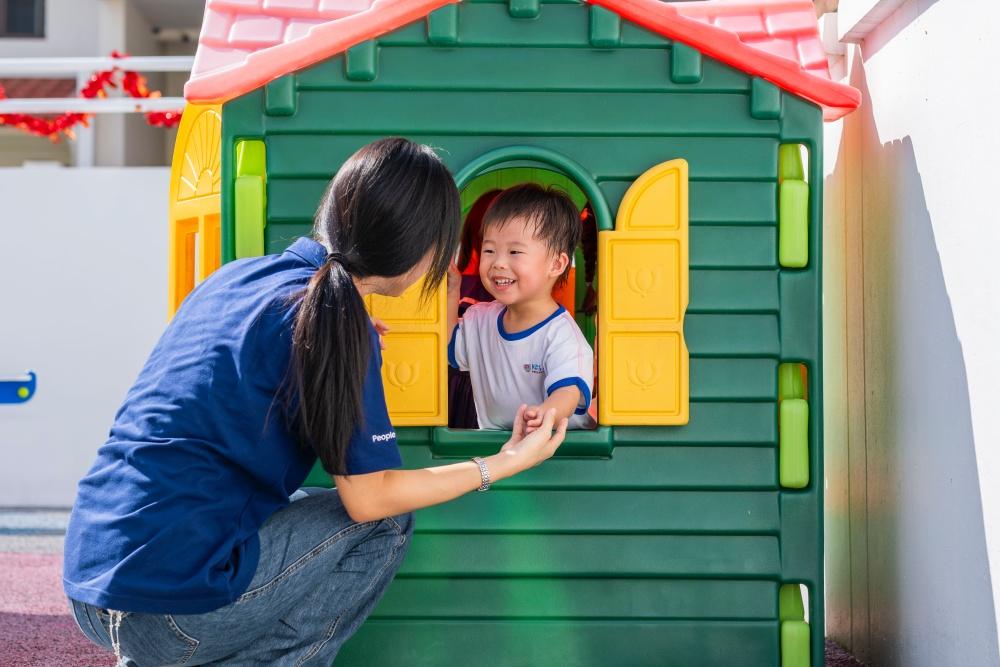
At Little Footprints, our educators respond to fear with validation and calm presence rather than dismissal. We know that teaching children how to overcome fear isn't about reasoning them out of it. It's about sitting with them in it, calmly, until it passes.
Our classrooms are also designed to reduce fear and anxiety at their roots through consistent routines, warm relationships with educators, and a culture that welcomes all feelings. This is the heart of our Sustainable Education® approach that shapes every aspect of childcare at Little Footprints.
Ready to find a preschool where your child feels safe to grow? Explore our curriculum or learn about preschool subsidies in Singapore to find out how we make quality early education accessible for your family. Book a centre tour today and discover how Little Footprints can support your child.


